Home / MESP Electronic Air Filter / MESP AHU POC Demo Toolkit
MESP AHU POC Demo Toolkit


To help you demonstrate MESP performance at customer sites and advance qualified project opportunities, AQT now offers a reusable MESP AHU POC Demo Toolkit together with a distributor support policy.
Designed for POC projects involving AHUs, MAUs, RTUs and similar air handling systems, the toolkit supports temporary on-site installation and before-and-after measurement of particulate matter, airflow and power consumption. After each demonstration, the equipment can be removed and reused for another customer project.


One Toolkit for Multiple POC Projects
The toolkit is configured for a typical AHU installation and includes:
- 25 MESP electronic air filter modules in two standard sizes
- Inlet and outlet PM sensors
- A portable air quality monitor
- A smart power meter
- Two Bluetooth wind speed meters
- A six-output POC control box
- Installation clips and sealing materials
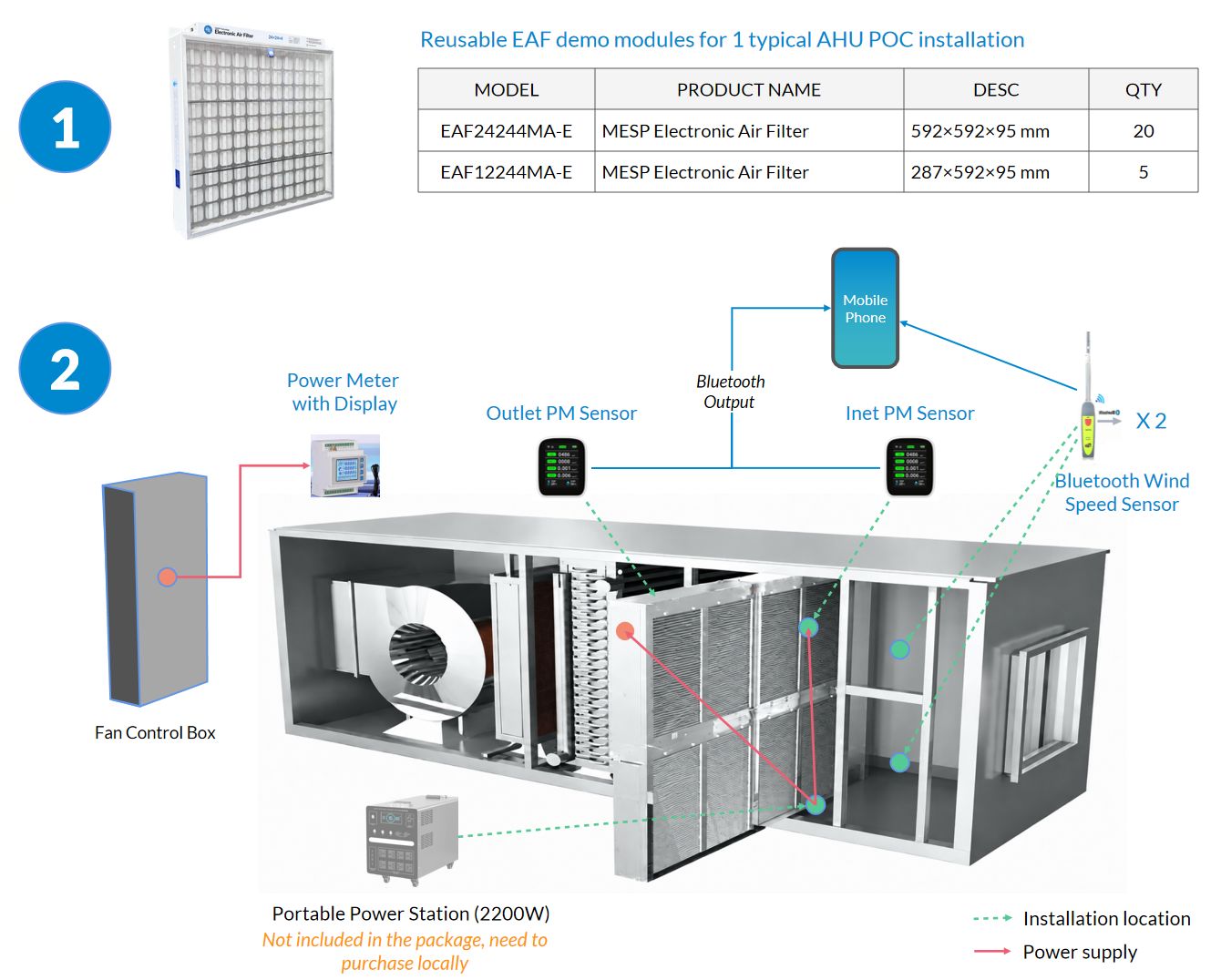
The reusable setup allows you to run multiple customer demonstrations with the same toolkit.
A portable power station is not included due to international shipping restrictions on lithium batteries and must be sourced locally. Please refer to the attached document for the recommended specifications.
The program gives you a practical way to demonstrate MESP performance under actual operating conditions, provide customers with measurable results and support the conversion of pilot opportunities into commercial projects.
The program supports market development but does not guarantee project results, energy savings, ROI or customer orders. Distributors remain responsible for local customer communication, site installation, project coordination and any commercial commitments made to customers.
System Function
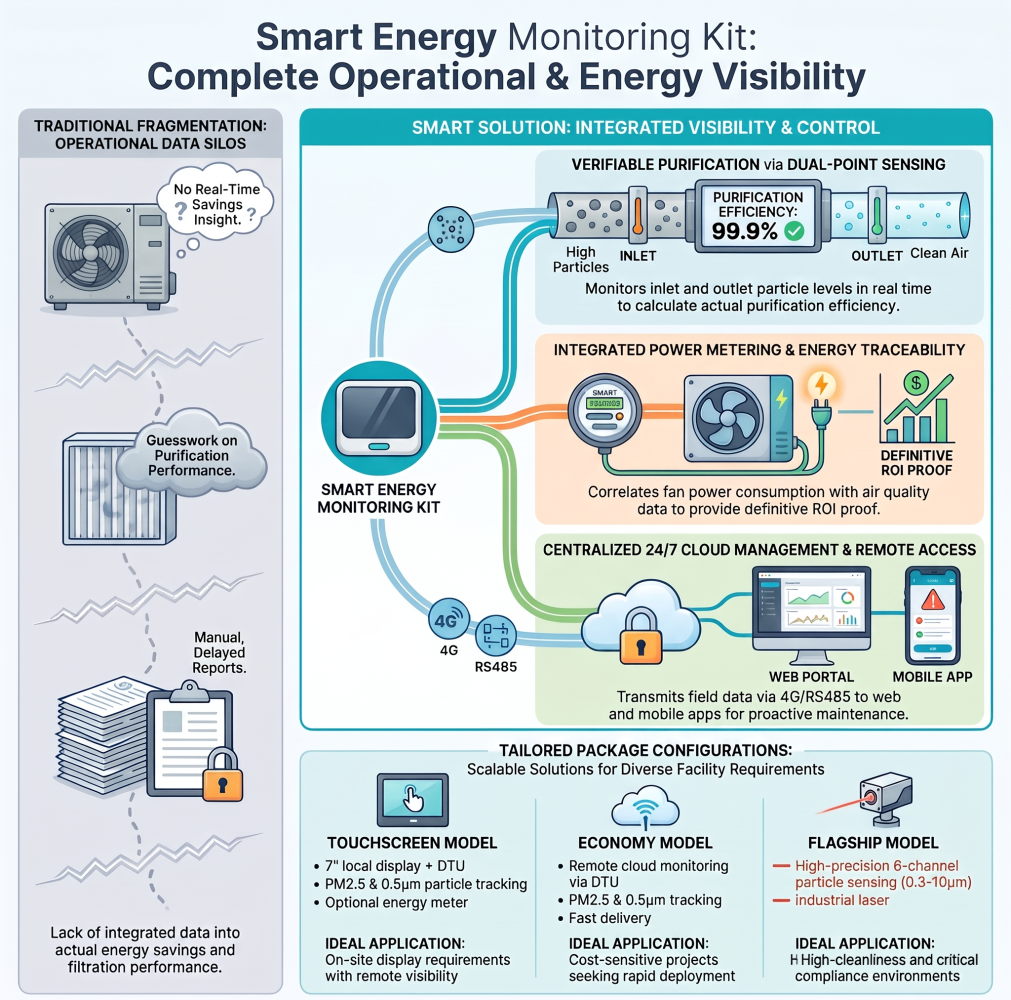
1. It shows how well the air is being cleaned.
One sensor sits at the air handling unit's inlet and another at its outlet. Comparing the "before" and "after" air in real time gives you a live purification efficiency figure, so you're no longer judging by feel or waiting for a one-off third-party test.
2. It connects clean air to energy cost.
A built-in power meter tracks how much electricity the fan uses. Because air quality and energy now sit on the same screen, owners can see what their clean air costs to deliver and whether the system is running efficiently.
3. It sends alerts before a small problem becomes a big one.
Data goes to a cloud dashboard you can check in a web browser or on a phone, 24/7. If performance drops, the system flags it. You can manage multiple units or buildings in one place and export reports for management, auditors, or ESG documentation.
4. It changes filters when they need it, not on a fixed date.
Replacing filters too early wastes money and creates landfill waste. Replacing them too late makes fans work harder and burn more power. With live efficiency data, maintenance follows the equipment's real condition. The data can also be linked to the building management system (BMS) to support fan speed control