Revolutionizing Cleanroom Air Purification: Breakthroughs and Advantages of Micro Electrostatic Precipitation Technology
October 14, 2024 | Dianne Zhu
As high-tech industries continue to grow rapidly, cleanrooms have become essential for ensuring product quality and safety.
What Is a Cleanroom?
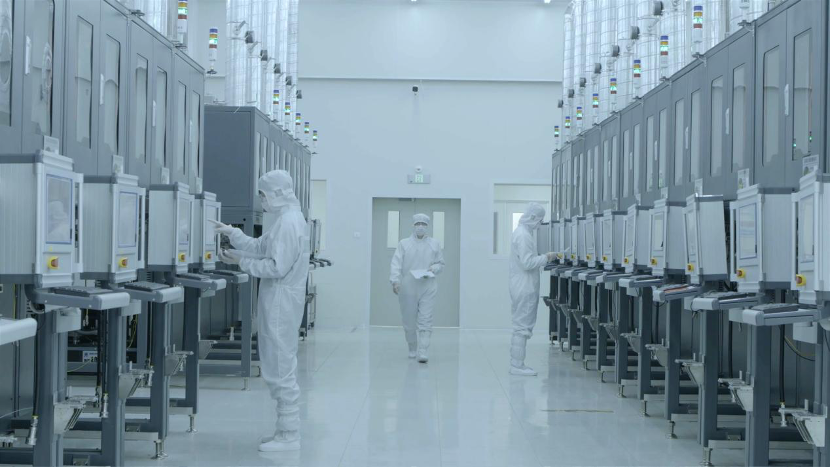
A cleanroom is a specially designed space used to control environmental factors such as cleanliness (particles, harmful gases, bacteria, etc.), pressure, noise, micro-vibrations, static electricity, airflow speed/direction, temperature, humidity, electromagnetic interference, and lighting. These spaces are critical for industries like semiconductors, biopharmaceuticals, food processing, and cosmetics manufacturing. Clean environments are crucial for maintaining product quality, stability, production efficiency, and even worker health.
Cleanroom standards are based on international guidelines like ISO-14644 and national standards such as GB 50073 in China. Each cleanliness level is determined by the maximum concentration of airborne particles allowed. For instance, an ISO Class 1 cleanroom allows no more than 10 particles of 0.1 microns per cubic meter of air, while an ISO Class 9 cleanroom permits up to 35,200,000 particles of 0.5 microns per cubic meter.
Challenges in Cleanroom Air Purification
Traditional cleanroom air purification relies on primary, medium, and high-efficiency filters. While effective at removing particles, these systems have several downsides, including high energy use, expensive filter replacements, and frequent maintenance. Traditional disinfection methods, such as UV lights, formaldehyde, ozone, hydrogen peroxide, and ethylene oxide, are also problematic because they can’t be used in occupied spaces, making real-time disinfection difficult and disrupting production.
A New Era in Cleanroom Air Purification
Micro-Electrostatic Precipitation (MESP) is an advanced air purification technology that uses closely spaced electrode plates to create a powerful electric field that cleans the air. Building on the strengths of traditional electrostatic methods, MESP offers a significant upgrade by dramatically increasing dust-holding capacity.
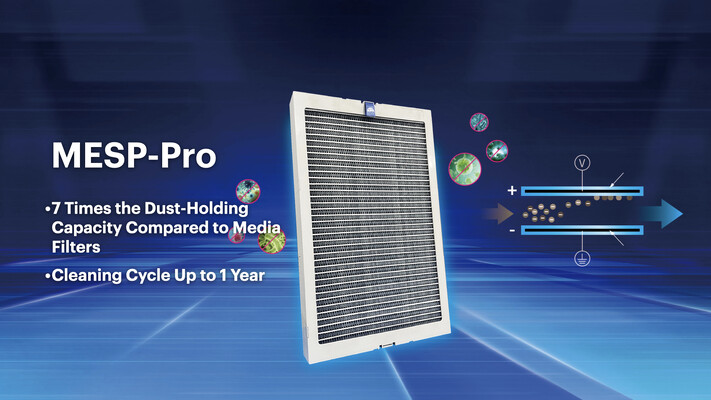
The system works by applying a special semiconductor coating to the electrode plates using advanced manufacturing techniques. This design maintains high filtration efficiency while preventing sparking. The strong electric field between the plates captures airborne particles and kills bacteria, viruses, and other microorganisms attached to them.
Key Benefits of This Technology:
- High-Efficiency Filtration: It’s highly effective at capturing ultra-fine dust particles, particularly those around 0.3 microns.
- Washable and Reusable: The filters can be washed and reused, significantly reducing the cost of replacing filter materials.
- Energy-Efficient: The filters create low airflow resistance, meaning HVAC fans can operate with less energy, saving on energy costs.
- Safe and Reliable: By using advanced insulation materials to cover the electrodes, the system prevents the production of harmful ozone, ensuring safer air.
- Built-in Sterilization: While filtering particles, it also kills bacteria and viruses attached to them.
- Large Dust Capacity: Special manufacturing processes increase the filter’s dust-holding capacity, which extends the maintenance cycle and lowers labor costs.
MESP as a Medium-Efficiency Filter
In cleanrooms, MESP Pro is often integrated into Air Handling Units (AHUs) or Makeup Air Units (MAUs). It can be used as a pre-filter to capture larger particles, reducing the load on downstream filters. Alternatively, MESP Pro can serve directly as a medium-efficiency filter, providing a mid-level of particle removal.
How It’s Used:
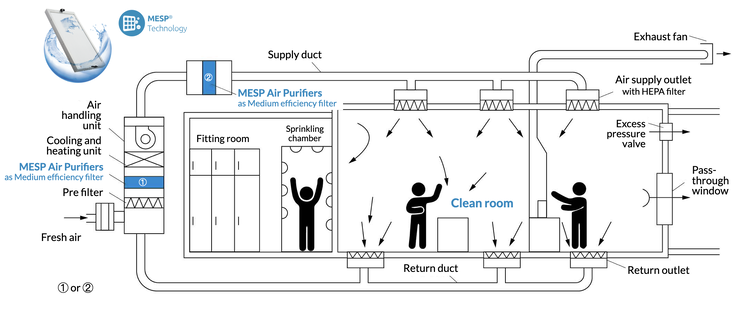
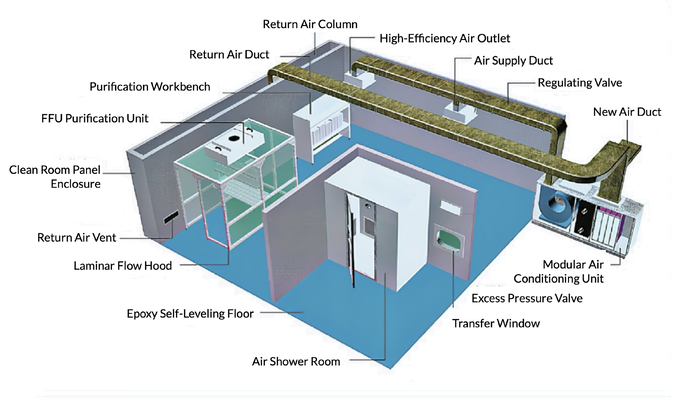
In cleanroom systems, MESP Pro can be placed inside an AHU as a medium-efficiency filter. Here’s how it fits into the system:
- Fresh Air Intake: Outside air passes through a coarse filter to remove larger particles.
- Air Handling Unit: Fresh air and recirculated air pass through the MESP Pro filter for medium-level filtration and disinfection. The air is then heated or cooled as needed.
- Cleanroom: Air circulates back through return ducts to the AHU for re-filtering.
- Pressure Relief Valves: These help maintain positive pressure in the cleanroom, preventing contamination from entering.
- Air Supply and Return Outlets: Air is supplied into and returned from the cleanroom through these outlets.
- Exhaust Fan: Polluted air is expelled from the cleanroom.
Economic Benefits
- Lower Operating Costs: By reducing the need for frequent filter replacements and cutting energy use, MESP Pro technology helps lower the operating costs of cleanrooms.
- Energy Efficiency: The low-resistance design reduces energy consumption, leading to further cost savings.
Conclusion
Micro-electrostatic technology is an efficient, energy-saving, and safe solution for cleanroom air purification. It provides an excellent alternative to traditional filters, dramatically reducing energy use and material costs, making it an ideal choice for modern cleanrooms. As this technology evolves, micro-electrostatics is playing an increasingly important role in industries such as pharmaceuticals, healthcare, food processing, and surgical cleanrooms.